
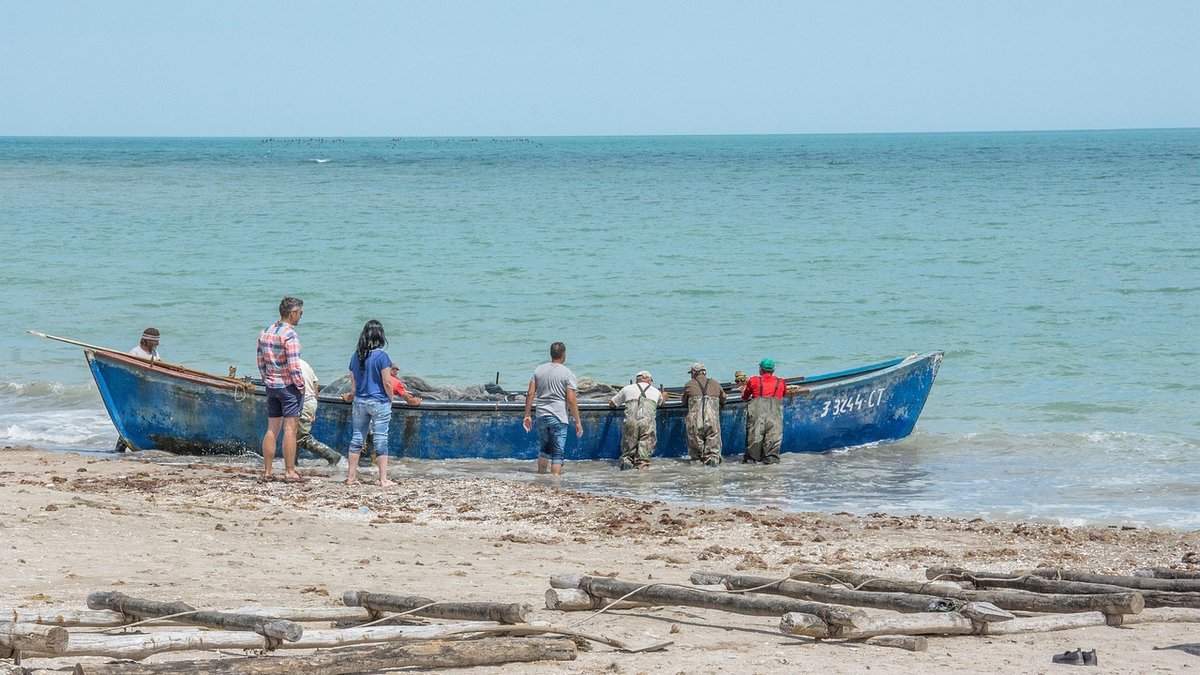
At the head of the tide, behind a pair of heavy doors, a working boatyard smells of oak, linseed oil and hot pitch. A shipwright in a worn apron taps a caulking iron with a mallet, and the sound carries across the quay. This is where British coastal heritage is kept alive — not under glass, but afloat, in fishing boats, dinghies and pleasure craft that still need frames, planks and fastenings. Winter refits begin as soon as the boats are hauled out; launch day is the deadline that shapes every task.
Traditional boatbuilding starts with the right tree. Locally sourced timber is not a romantic extra; it is a practical choice. Oak grown on nearby estates gives frames, floors and keels the strength to take a pounding. Larch from managed woods provides planking that swells tight in the water. Douglas fir makes long, straight spars. Elm, once common in English hedgerows, was prized for keels and stern posts because it resists splitting. A shipwright reads grain, shakes and knots the way a sailor reads weather.
Timber is stacked with stickers and left to season, sometimes for years. Offcuts are never thrown away; they become breasthooks, rubbing strakes or wedges.
Hand tools dominate in a traditional workshop. A shipwright may use a bandsaw or thicknesser for the first cut, but the final shape usually comes from an adze, a drawknife or a plane. A blunt tool tears timber and ruins the line of a boat.
There are modern aids too: epoxy for repairs, stainless steel fastenings, powered sanders. But the old methods still set the standard.
A fishing boat restoration begins with a survey, not a sander. The shipwright sounds the planking with a hammer, checks frames for rot, and looks for broken fastenings. Then the boat is stripped back: old paint burned off, rotten timber cut away, and the shape taken from the surviving structure.
Replacement work follows the original build. A clinker-built coble gets overlapping planks, each one fitted and riveted. A carvel-built herring drifter gets flush planking, caulked with oakum and payed with pitch or a modern flexible compound. Frames are replaced one at a time so the hull does not lose its shape. When the hull is sound, it is primed, painted and antifouled. A restored fishing boat should look right, sit right in the water and be ready for another generation of work or leisure.
Not every wooden boat in the harbour is a working relic. Dinghies, yachts, motor launches and rowing boats fill the yard. Their repairs are smaller but just as skilled. Winter refit means scraping and varnishing brightwork, checking keel bolts, tightening stern glands and repairing garboards. A cracked plank can be replaced with a graving piece — a shaped insert glued and fastened into sound timber. A worn centreboard slot can be bushed. Varnish is built up in thin coats, rubbed back between each one, until the grain glows under the shed lights.
Owners often learn alongside the shipwright. They sand, paint and fetch tools, and in doing so they pick up the language of the yard: port and starboard, forward and aft, inwale and outwale. The harbour is a classroom as much as a workplace.
Traditional skills survive because they are shared. Apprenticeships, boatbuilding courses and yard mentors all play a part, but most learning happens by watching and doing. A young shipwright learns to sharpen a plane, mix pitch, judge timber by smell and weight, and caulk a seam so it stays tight. Heritage trusts, harbour festivals and small museums help, yet the real transmission is practical: an older hand guiding a younger one along a plank.
That is why the craft matters. Every repaired fishing boat, every varnished dinghy and every new oak frame carries knowledge forward. The tools are simple, the timber is local, and the harbour workshop remains a place where British coastal heritage is not preserved in silence but kept working, season after season, tide after tide.

Hi, my name is Anthony kuber. I am artist and fashion designer.
I love to travel and writing blogging.
Your email address will not be published. Required fields are marked *
Software Developer & Writer
Hey, I'm Diva, a developer and writer blending code and creativity. I'm driven by a deep curiosity and a relentless pursuit of excellence. Join me as I craft digital solutions and captivating stories.


